


Programmatic advertising has revolutionized how brands connect with audiences, but here’s the reality: what worked brilliantly two years ago might be holding you back today. The digital advertising landscape evolves at lightning speed, and staying competitive means constantly reassessing your approach.
If your programmatic campaigns aren’t delivering the results they used to, it might be time for a strategy refresh. Here are five telltale signs your programmatic approach needs an update, and more importantly, how to fix them.
Table of contents:
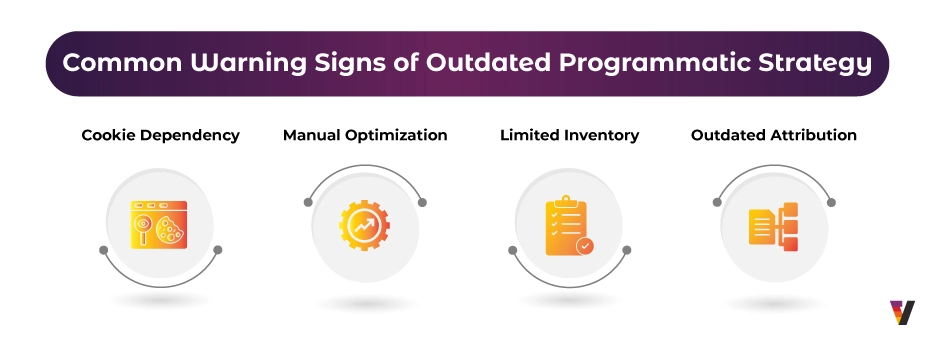
If your targeting strategy is built primarily around third-party cookies, you’re working with a foundation that’s rapidly crumbling. With major browsers phasing out cookie support and privacy regulations tightening globally, cookie-dependent strategies are becoming less effective by the day.
The Fix: Shift your focus to first-party data collection and contextual targeting. Build direct relationships with your audience through owned channels like email lists, loyalty programs, and website registrations. Contextual advertising, which places ads based on page content rather than user tracking, is making a strong comeback and delivers impressive results without privacy concerns.
2. Your Campaign Optimization Happens Weekly or Monthly
In today’s fast-paced digital environment, waiting a week to analyze and adjust your campaigns is like driving while looking in the rearview mirror. Real-time bidding demands real-time optimization. If you’re still running campaigns on autopilot for extended periods, you’re likely wasting significant portions of your budget on underperforming placements.
The Fix: Embrace automated optimization tools and AI-driven bidding strategies that adjust in real-time based on performance data. Set up automated rules that pause poor performers and scale winners instantly. Modern programmatic platforms offer sophisticated machine learning capabilities that can optimize far faster and more effectively than manual adjustments.
3. You’re Ignoring Connected TV and Audio Inventory
If your programmatic strategy is still focused exclusively on display and video ads on websites and mobile apps, you’re missing massive opportunities. Connected TV advertising has exploded, and programmatic audio through streaming services represents one of the fastest-growing channels in digital advertising.
The Fix: Expand your inventory sources to include CTV and audio platforms. These channels offer incredible targeting capabilities with the engagement power of traditional broadcast media. Start testing campaigns across these formats to reach audiences in new contexts where they’re actively engaged and receptive to your message.
4. Your Measurement Focuses Only on Last-Click Attribution
Crediting all conversions to the last ad someone clicked before purchasing gives you an incomplete and often misleading picture of your campaign performance. This outdated approach undervalues the entire customer journey and the various touchpoints that influenced the final decision.
The Fix: Implement multi-touch attribution models that recognize the contribution of every interaction along the customer journey. Use data-driven attribution that assigns credit based on actual impact rather than arbitrary rules. This more nuanced view will help you understand which channels and placements truly drive results and deserve more investment.
5. You Haven’t Updated Your Brand Safety and Fraud Prevention Measures
Ad fraud techniques and brand safety concerns evolve constantly. If you set your brand safety parameters years ago and haven’t revisited them, you’re likely either being too restrictive and missing valuable inventory, or too lenient and exposing your brand to risk.
The Fix: Regularly audit your brand safety settings and fraud prevention tools. Work with partners who use advanced verification technologies and maintain updated block lists. Consider contextual analysis tools that go beyond simple keyword blocking to understand the actual sentiment and context of content. Invest in quality inventory from trusted exchanges and publishers rather than chasing the lowest CPMs.
Conclusion:
The good news is that addressing these issues doesn’t require starting from scratch. Small, strategic adjustments to your programmatic approach can yield significant improvements in performance and efficiency. At Vertoz, we help brands navigate these evolving challenges with cutting-edge programmatic solutions that stay ahead of industry changes.
The key is to stay curious, keep testing, and never assume that what’s working today will work tomorrow. Programmatic advertising rewards those who adapt quickly and think strategically about the future.
Ready to modernize your programmatic strategy? The time to act is now.